@lgrammel — AI SDK 5: loop until condition
AI SDK 5 concept: loop until condition
Often you want flexible control over when the steps loop stops.
That's the right call — hard-coded step counts are a hack. Being able to break on an arbitrary condition means you can stop when the task is actually done, not when a number runs out. Curious how this interacts with streaming.
@lgrammel — AI SDK 5: UI message persistence
AI SDK 5 preview: UI message persistance
We recommend storing UI messages, not model messages, if your application has a useChat component.
This ensures that the UI state can be correctly restored and helps integrating backends other than streamText (e.g. Langchain).
Smart, because model messages are an internal representation that leaks implementation details into your storage. UI messages are what the user actually saw — restoring those is what matters for perceived continuity.
@lgrammel — AI SDK 5: UI message metadata
AI SDK 5 preview: UI message metadata
UI messages in AI SDK 5 will have a generic metadata property (instead of specific properties like createdAt).
This lets you send and show the message metadata that's important in your application.
Makes sense — createdAt being a first-class field was always a bit opinionated. A generic metadata bag gives you room to attach cost, latency, model ID, whatever your app actually needs without fighting the type system.
@xn1cklas — stagewise: browser commenting for Cursor
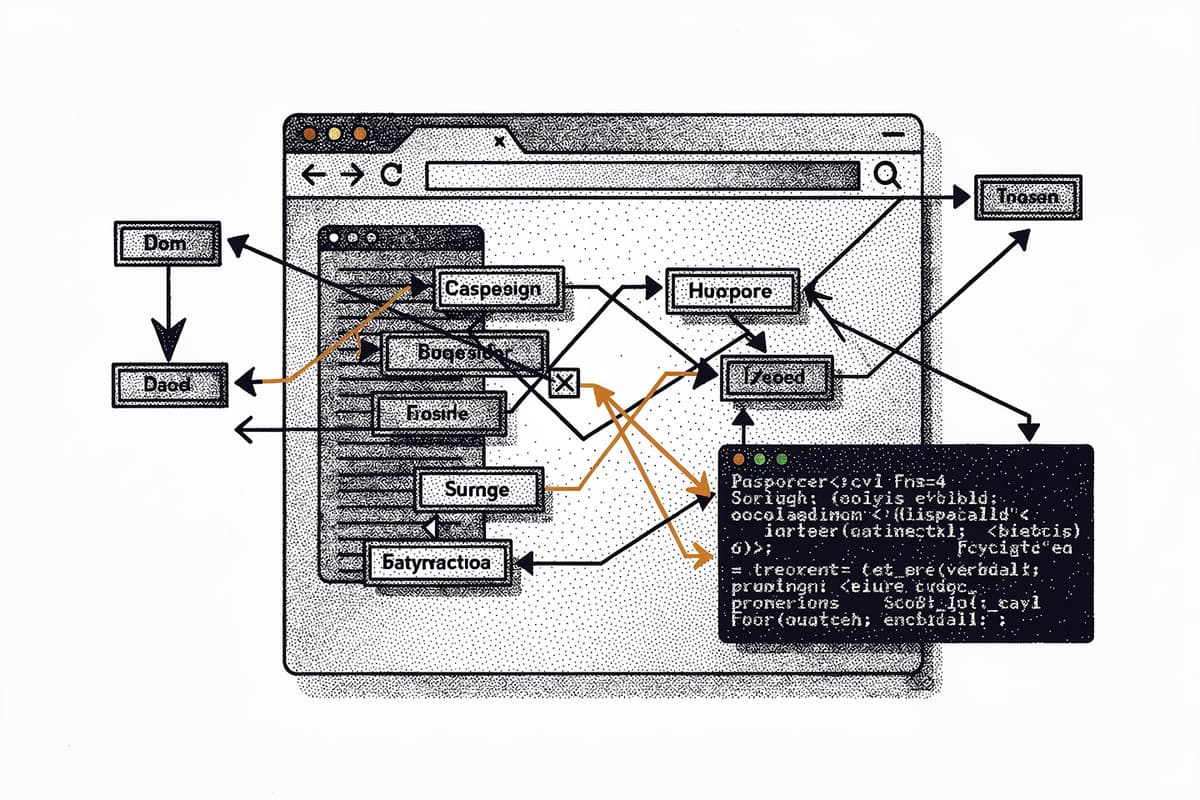
What if Cursor could actually interact with your browser?
💬 Comment on any DOM element 🧠 We send the real context to Cursor or your agent ⚡ Instantly get suggested code changes No hacks. No copy-paste. It just works.
stagewise bridges the gap between browser and editor in a way that should have existed sooner. Right-click a DOM element, add a comment, and Cursor gets the actual component tree + context — not a screenshot you pasted in. The "no hacks" claim is bold, but the architecture (sending real context) is the right move.
@tiptap_editor — Tiptap AI Suggestions
Need Grammarly-style AI suggestions inside your app? In this 2-min demo, @ai_arnau shows how Tiptap AI Suggestions delivers:
✅ Custom rules ✅ Accept/reject flow for each suggestion ✅ Plug in any LLM ✅ Fully customizable ✅ Self-hosted
Docs: https://tiptap.dev/docs/content-ai/capabilities/suggestion/overview
The self-hosted + BYO-LLM angle is what makes this interesting. Grammarly-style UX without sending your users' text to Grammarly's servers. Custom rules mean you can enforce your own style guide, not someone else's opinion on semicolons.
@polar_sh — Polar + Hono: payments in a few lines
This is all you need to accept payments with @honojs.
Honestly, the Hono integration looked tight from what they showed. Hono is already minimal by design, so if Polar's SDK matches that energy, it could be the least painful way to add a checkout to a backend that doesn't want to be a monolith.
@polar_sh — Polar + BetterAuth
Payments with @better_auth 🤌🏻🤌🏻🤌🏻
✨ Automatically create customers on signup 🪩 Associates customers with your Users without any DB schema changes 💫 Supports Checkouts, Customer Portal & Webhooks with less than 10 lines
Get started with Polar for BetterAuth today.
The "no DB schema changes" part is the claim worth verifying. If they're storing customer associations on their end and just giving you a lookup, that's actually a clean tradeoff — less to own, at the cost of coupling.
@kevinkern — Cursor 0.50 mini-map toggle
This tiny NEW toggle in Cursor 0.50 creates a mini-map for more accurate completions.
A mini-map feeding context into the completion model is a clever UX decision — you get a visual overview of the file structure while the underlying model gets more of what it needs to predict what you meant. I'll take any improvement to completion accuracy in large files.
@ryanvogel — locally cached, open source todo app
i made the smartest (and fastest) todo app ever
locally cached, sleek, and open source
"Smartest and fastest" is a high bar with no numbers attached, but "locally cached" is the right starting point for a tool you use all day. Saved this to check whether the local-first architecture is actually offline-capable or just cache-as-perf-trick.
@GithubProjects — open source time tracking
Your Time, Your Data, Your Control—Open Source Time Tracking
The pitch is in the tagline: your data stays yours. Time tracking is one of those categories that's still dominated by SaaS tools that have no business owning that data. Bookmarked to look at the data model — local-first time tracking that I can query myself is the kind of thing I'd actually use.
@soltwagner — design inspiration resource list
Best Resources for Website Design Inspiration
- Supahero.io → Hero sections
- Bentogrids.com → Bento grids
- Footer.design → Footers
- CTA.gallery → CTA sections
- Landing.love → Landing pages
- Saaspo.com
Honestly just saved this so I don't forget it exists. Useful the next time I need to look at hero patterns without scrolling Dribbble.
@damianplayer — Automations vs AI Workflows vs AI Agents
Automations vs AI Workflows vs AI Agents
Most don't know the difference.
The distinction actually matters when you're scoping what to build. Automations are deterministic, workflows add branching + AI calls, agents add dynamic tool selection and state. Collapsing all three into "AI" is how you end up with the wrong architecture for your use case.